Podcast series
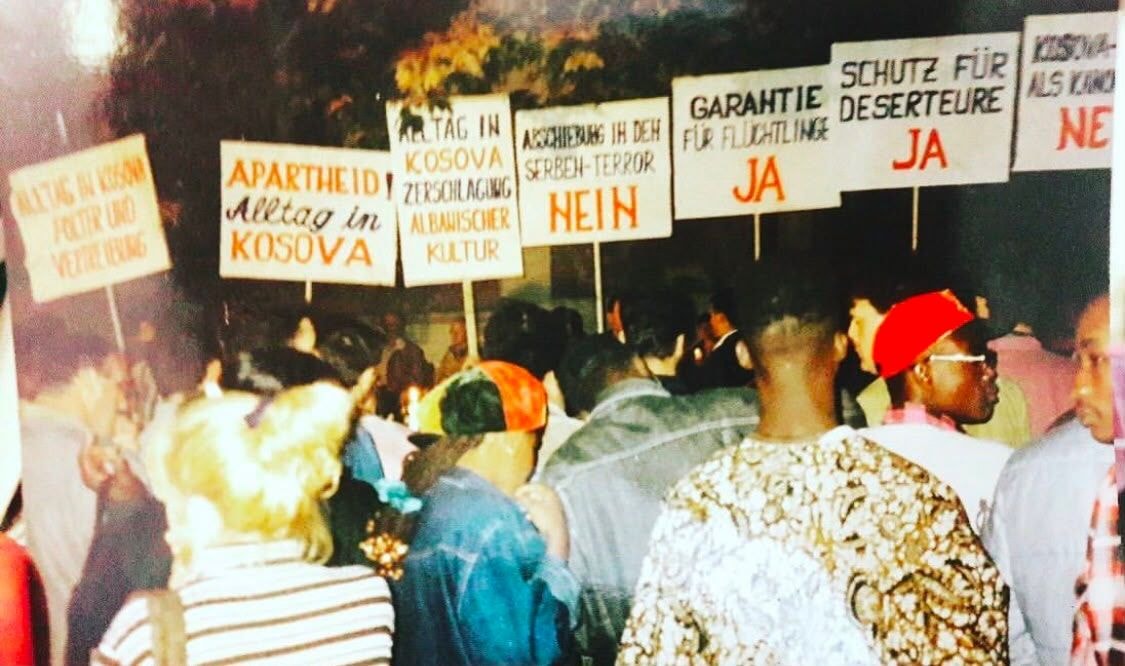
The 1990s Refugees and Immigration
The wars of Yugoslav dissolution and the refugees it produced along border regimes. This series accounts what that displacement looked and felt like from to those who lived it.
About this series
Displacement, survival, and the long road to settlement
Between 1991 and 1999, the wars of Yugoslav dissolution forced hundreds of people from their homes. Bosnians, Kosovars, Croats, and others fled to Germany, Austria, Switzerland, the UK, Scandinavia, and beyond, arriving as refugees in countries that were often unprepared, unwilling, or ambivalent about their presence. Many were given temporary protection status, told they would return when the war ended, but with time they made a new home in these countries.
This series documents that experience from the inside, through the voices of people who lived it. We speak with survivors, former refugees, and their children about the journey, the reception, the years of uncertainty, and the slow process of building a life in a country that had not asked for them. We also examine the political and legal frameworks that shaped their experience, and the ways in which those frameworks continue to affect diaspora communities today.
Episodes cover the Bosnian and Kosova war and genocide, the experience of temporary protection, the politics of return, and the long-term psychological and social effects of forced displacement.
What it means to build a life in a new country where you arrived with one pair of clothes, no language skills, leaving the loved ones in a conflict ridden country.
Watch & listen
Episodes from this series
Episode
Memory and Diaspora | 'Balkanism' and Digital Geographies of Cultural Objects
Arber Qerka-Gashi
Arber Qerka-Gashi explores 'Balkanism' and how diaspora communities engage with cultural objects in digital spaces — and what these digital geographies reveal about memory and belonging.
Episode detailsEpisode
Border Tongues | 'Searching for Language'
Jonë Zhitia
What happens to language when you cross a border? Jonë Zhitia reflects on growing up between languages, the politics of linguistic belonging, and searching for a mother tongue that no longer feels entirely your own.
Episode detailsEpisode
Are UK Kosovars the 'posh spice' of our diaspora?
Dafina Paca
Dafina Paca unpacks the hierarchies, stereotypes, and genuine differences between Kosovar communities in the UK, Germany, Switzerland, and beyond — and what these distinctions reveal about diaspora identity.
Episode detailsEpisode
Kasetat e Vitit Ri — Popular Culture and Diaspora Consciousness
New Year's Eve Cassettes
Before streaming, before downloads, there were cassettes. This episode traces the cultural history of New Year's Eve cassettes and what they reveal about how diaspora communities maintained connection to home through popular culture.
Episode detailsEpisode
Balkan Cuisine in the Diaspora: Identity Through Culinary Traditions
Irina Janakievska
Food is one of the most intimate archives of diaspora life. Irina Janakievska explores how Balkan culinary traditions have been preserved, adapted, and reimagined in diaspora — and what the kitchen reveals about identity and belonging.
Episode detailsEpisode
Living the Political: Choosing Kosovo
H.E. Dr. Nita Luci
H.E. Dr. Nita Luci reflects on her journey from academic to diplomat, on the relationship between the diaspora and the Kosovar state, and on what it means to live the political in a country still defining itself.
Episode detailsEpisode
Srebrenica Genocide 30 Years on | Survival, Loss, and the Ongoing Fight for Justice
Selma Jahić
Selma Jahić, who survived the Srebrenica genocide with her brother and mother, shares her family's story of survival, loss, and the ongoing fight for justice and remembrance thirty years on.
Episode detailsEpisode
Music, Memory & Movement: Exploring Diasporic Life Through Sound
Rina Limoni
Host Rina Limoni is interviewed by Arbër Qerka-Gashi. Using songs as prompts, the conversation traces a life lived across borders through the music that marked each chapter — displacement, migration, identity, code-switching.
Episode details